
My main account is solo@slrpnk.net. I’m also using the one here because I really like the feed feature.
Btw I’m a non-binary trans person [they/she/he].
- 95 Posts
- 57 Comments

I suppose, this is quite debatable, because the current money system does waste a whole lot of energy, It’s just not calculated how much. Honestly, if you have have links showing how much energy the banking system consumes globally, please share.
On the other hand, bitcoin’s blockchain is a decentralised and transparent system. This is not something that the banking system can claim.




Industrial manufacturing is declining in Europe for sure, but not because of complying to climate policies, as you claimed. Industrial production is falling in most European Union countries, largely due to a lack of competitiveness with China and the US.
Also, the article you linked about the EU loosing manufacturing jobs does not back your claim. On the contrary it says: The move to a sustainable economy is an opportunity to turn the situation around. Towards the end, it also mentions that the EU should make sure that industry jobs are not lost and that Europe’s industrial sectors and their workers are fundamental to delivering the climate solutions Europe needs, which are very different things to what you said.


The leading countries in addressing climate change appear to have prioritized their efforts at the expense of industrial growth,
Personaly, I would be glad if this were the case. Honestly, I wonder how you came to this conclusion


Carbon dioxide from Google’s power plant will be injected into the same geological storage formations already used by ADM’s ethanol facility. The site is the location of the first long-term CO2 storage well in the U.S.
Typically, around 2,000 metric tons of CO2 are sent into the well every day. But injections there were halted in 2024 when salty brine, which stores dissolved CO2 deep underground, was found to have migrated into “unauthorized zones,” according to the EPA. ADM said the leak was the result of corrosion at a monitoring well, E&E News reported, and they’ve since resumed injections.
A recent study of 13 CCS facilities representing 55% of all captured carbon shows that most aren’t living up to expectations.
I don’t think it’s a misleading title because leaks are considered emissions.
The leaks from oil & gas are huge to begin with, and some of them are even called super-emitting methane leaks. From another article:
About 40% of human-caused methane emissions come from leaks from fossil fuel exploration, production and transportation. These rose by almost 50% between 2000 and 2019. Another 40% comes from agriculture(…) All are forecast to rise.
Not only that these leaks and are not visible to the naked eye, so
the big challenge is knowing exactly how much methane is being emitted, where it is being emitted and for how long it has been emitted. [source UN environment program]
The waste part, for some reason, I thought it was kinda implied. Thanks, anyways.
The part that you say more or less that coal plants produce more radioactive waste than nuclear plants even if we take into account nuclear accidents, is the one that made me wonder tbh.
Btw, perhaps, one of the most famous papers about this topic was written in 1978 [abstract, [full pdf](file:///home/myname/Downloads/9362611%20(1).pdf) ], but it doesn’t mention accidents. Actually, in the abstract they say that the study does not even assess, the total radiological impacts of a coal versus a nuclear economy. This one, from 2021, doesn’t talk about accidents, either.
I thought you might have a relevant article or something to share about the accident part you mentionned?
Sorry, I don’t understand why you say this. Can you explain?
Edit: Maybe it’s the “skeptical” thing. Well this site is about the following
Explaining climate change science & rebutting global warming misinformation
Global warming is real and human-caused. It is leading to large-scale climate change. Under the guise of climate “skepticism”, the public is bombarded with misinformation that casts doubt on the reality of human-caused global warming. This website gets skeptical about global warming “skepticism”.Our mission is simple: debunk climate misinformation by presenting peer-reviewed science and explaining the techniques of science denial, discourses of climate delay, and climate solutions denial.
Coal plants produce more radiation than nuclear plants, even if you take all the accidents into account.
In a way yes, but only in the sense that nuclear waste is supposed to be well contained and stored for disposal. Still, the accidents are not taken into account, at least in the studies I took a look at. If you have any that says otherwise, please share.
 2·4 months ago
Ok, I think I understand better what you meant. It looks like we see things very differently.
For example, in a conversation about ultra-processed foods I don’t see what you mention: it’s always been intended to target poor people’s food. Instead, I see capitalist/neoliberal/etc economic incentives and neglect for anything or anyone else. What do I mean by that?
For me, the capitalists that are in the food industry are there because they just care about the economic value, not the nutritional one. So in order to maximise their profit these capitalists/industrialists/etc, they say something like: “if I buy 1 potato I can make 1 potato chips packet, but if I turn this potato into powder then I can mix it with this other powders and get 5 packs of crisps that I can sell cheaper than the competitor with the real potato crisps”
So poor people are affected by UPFs not because there is a conspiracy targeting them, but because UPFs have almost zero nutritional value, while being in the price range they can afford to consume.
I’m convinced ‘ultra-processed food’ is a bullshit term used bully poor people for their lifestyle.
Not too sure what you mean. Ultra-processed food has a pretty standard definition. Briefly, it’s food that has been highly processed by some industrial methods.
What about the environmental cost of expensive air shipped food like lobster or the very fancy single origin coffees?
That’s a tricky question, but there is a section in this post called What we don’t know, where you could partially find some answers. They explain how difficult it is to track everything down: Getting an exact measure of the environmental toll of UPFs [Ultra-Processed Foods] is nearly impossible, given that, definitionally, UPFs consist of many ingredients and a high volume of opaque processes.
I think this depends on the locality. Where I come from one could argue that burning a forest is a form of deforastation anyways, because in order to be able to get a building permit, it must not be in a forest zone. So this is a typical practice: burn forest, buy land, build villa/hotel/etc.
In this context tho, I believe what is meant by deforastation is cutting down trees, clear-cut style, for some commercial purpose.
deleted by creator
I think you are right, but we also need to factor in that the west has been exporting its industrial production to other countries (cheaper labor, cheaper taxes etc). So it seems to be a tricky thing to see this by country.
The way I see things, it’s more that the prevelant economic system dictates this kind of behavior, more than any one country. In the sense that the countries in power change, but they all follow some sort of capitalist model, which is also a form of neo-collonialism imo, at least when it comes from western countries . China is another story imo, that follows the economic model.
About this article, one thing that I don’t like is that once more the focus is on personal decisions. This shifts the focus from a systemic problem to personal problem. It’s the industry that dictates regulations and policies through lobbying. Let’s keep our eyes on the goal.
Edit: Of course boycotting the industry would be a great solution, and this doesn’t even mean that someone needs to be vegan, or that they are loaded wth money. Or even avoiding bying these products would be great. Still, the most important thing imo is that industries stop doing what they do.
 2·4 months ago
Thanks for linking this. She does talk about this section at 37:39.
Yes, as she has said before, she is against the genocide. Still, even here, she says stuff like
Crimes by Israeli settlers tolerated by the government [38:39]
No. The Israeli government promotes and legislates those crimes in the illegally occupied Palestinian territories - it doesn’t just tolerate them.
I have noticed that she really doesn’t like talking about anti-zionist points, even tho every now and then she mentions that it is not the same as antisemitism. Here is a very gentle and well-intended critique of her approach to antisemitism.
This video is very informative and to the point imo, until she arrives at the point of Israel. Her analysis there becomes watered down to say the least in favor of white settler colonial zionism (after 42:55) by using the “both sides” arguments.
This is from the comment section of her video, and I find it very accurate:
Why would a study or analysis of the Palestinian Genocide require a look at antisemitic hate crimes? It has literally no bearing on whether Israel is engaged in a colonial project or exterminating Palestinians.
 221·4 months ago
Great. Recognising Palestine is one part of the equation. Of course, this is done too many decades too late.
The other part of the equation is Israel. Practically, what will the UK do to stop its Genocide and when? It looks like the UK still supplies millions of pounds worth of arms to Israel
Edit: Freezing Israeli Zionist assets sounds like a great option too to stop a Genocide. And the UK knows how to do this since around £25 billion of Russian assets are held there (see article).
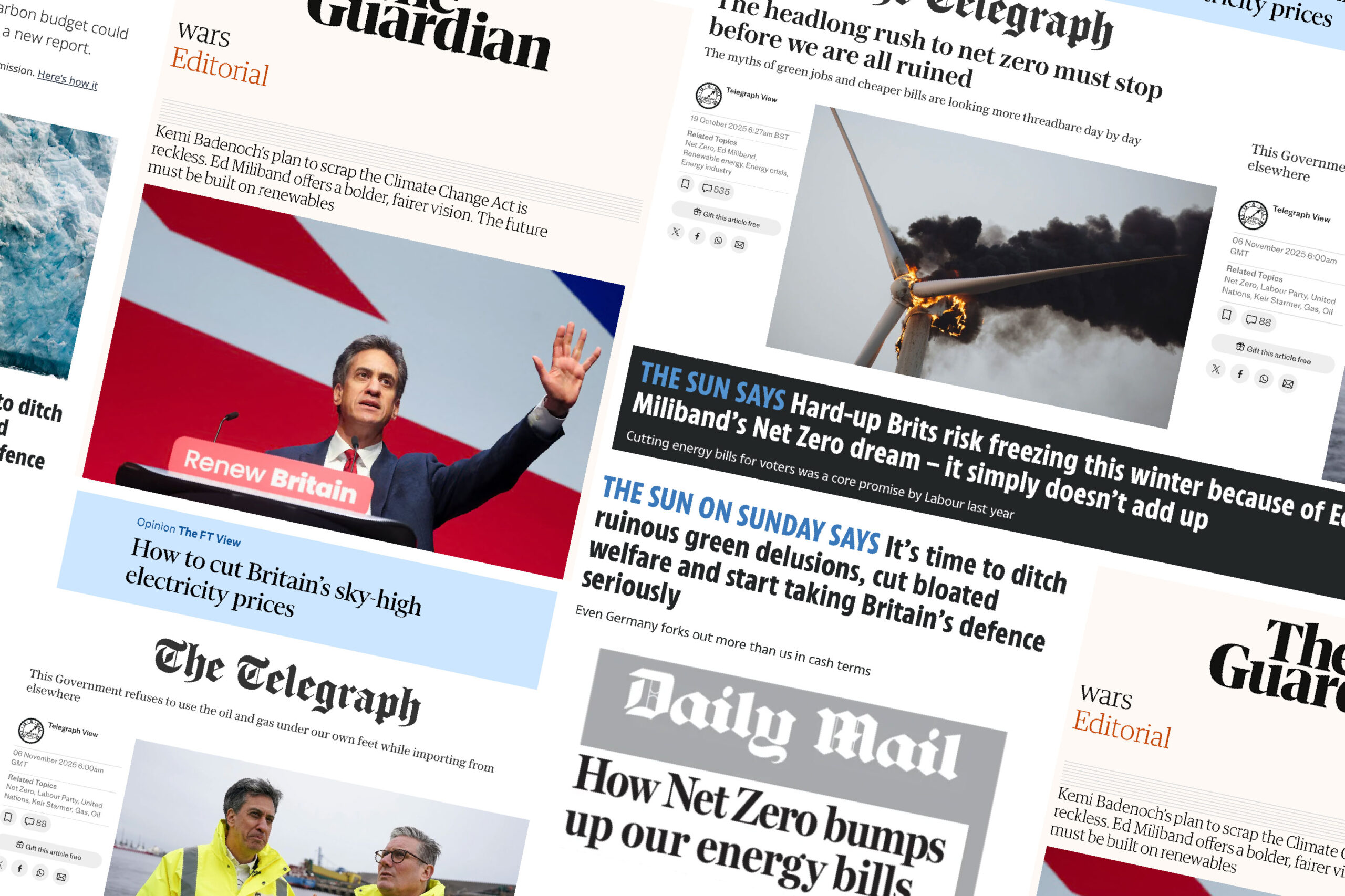
Tbh I find the “net zero” approach problematic on so many levels that I hesitated posting this article. But due to the fact that this is an analysis of the press that had a span of almost 15 years of this topic, it seemed like worth posting.
Apart from that, personally I agree with you (if I got you right) that privatisation of the energy sector in the UK , or any sector I can think of actually, is to the detriment of all living beings and the environment as a whole. Still I don’t mind researches that talk about other relevant things, even if I consider them less important, for example. Meaning, looking at one thing, doesn’t mean not looking to another.