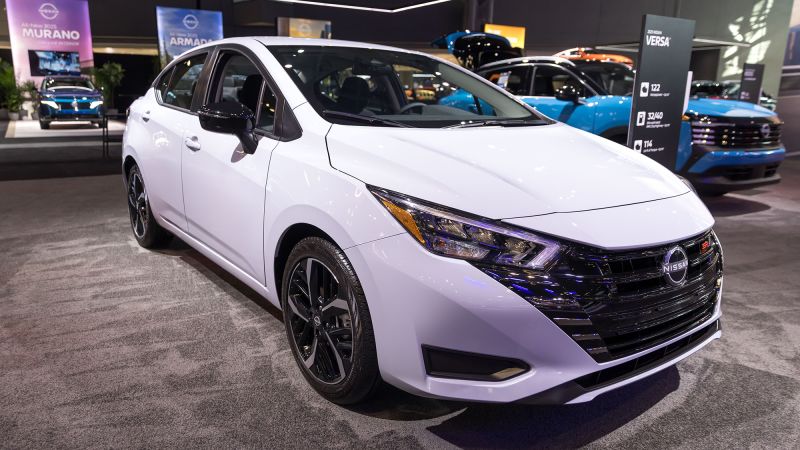
The end of production for the Nissan Versa means there are no new cars priced under $20,000 — a blow to some Americans who may find themselves priced out of the market.
The 1965 dodge dart cost $2153 when it released. That’s $22,004.55 according to an inflation calculator I found online. The dart is a badass car, imaging bying a sick muscle car today for less than 25 grand.
The charger 2 door, which is the closest dodge comparable to the dart. It starts at $54,995. Over double.
I realize dodge’s sales model is different and the market itself likely couldn’t be compared. But how the hell are we paying over double for vehicles that fit similar market slots? We are so fucked.
Edit: Dodgers to Dodge’s. Seriously autocorrect just doesn’t work.
You can get a modern car with similar performance.
1965 dodge dart as a muscle car so the V8 package
235 HP
Curb weight 1456 kg (3210 lbs)
About $2600 depending on package.
0-60 6.9 seconds
1/4 mile in 15.5 second
About 26k in todays cash
Toyota GR86
228HP
Curb weight about 2900 pounds
RWD
0-60 5.4
14 second quarter mile
Around 30k
What used to be top of the line is now a daily driver.
Safety and environmental regulations are what’s making new cars expensive compared to inflation. Even without the luxury bump in price.
New cars are also a literal order of magnitude more reliable. Most new cars have spark plug changes at 70k cars from then pretty much needed a full engine rebuild.
Counterpoint: Every single manufacturing method for these is easier, cheaper and more efficient now. It should not be more than double the price, mildly more expensive sure, in reality the Charger is a low end luxury muscle, but it is not that much more expensive after inflation to make, no way.
Those old cars were dirt cheap for the auto companies to assemble. That is why every environmental and safety regulation was fought tooth and nail.
Swap your own drums for disc brakes, then makes those abs. You can see those prices for aftermarket parts. Now do that for just about everything in a modern car.
They are just far more complex than anything today. There recently made increases are somewhat different, but real costs were increased
Cars today are simply not more reliable. I have drug a 48 Willy’s out of a barn that had been sitting for decades, adjusted the points and drained the fuel and put in new. Marvel mystery oil down the plug holes and bar by hand to ensure not seized and cleaned out the carb and she fired right up. Old cars may require more frequent service due to old mechanical systems, but they will far outlive anything made in the last 20 years. Automobile reliability peaked between 1990 and 2005 or so, anything made after is over complex (think can bus, one frayed wire and ur cars whole network goes down and immobilized you) and anything earlier still needs frequent attention yet very robust in design. Long service intervals =/= reliability, their just making them disposables after 100k miles now. See: low tension piston rings, cvt transmissions, “lifetime” fluids (no such thing…), carbon issues on intake valves and engine internals from direct injection and overstated service intervals to keep projected ownership costs down, oh I could go on and write a book about how new cars ain’t shit.
Sure maybe an inline motor from the 40-50’s with a manual transmission, drum brakes and manual steering was more reliable. Basically an old school farm tractor.
I think you are looking at survivability bias. The old cars left running are reliable, the unreliable ones were scrapped long ago.
Ease of repair is not the same as reliability.
My new cars are toasters. I change the oil, rotate the tires and swap out brake pads. When things go ‘wrong’ they continue to drive. A bad o2 sensor goes into an error state but the car still drives. It doesn’t just stall at each and every stop.
My 2012 nissan blows the doors clean off myold 76/77? pontiac lemans.
In the ~100k I had my Nissan I have not had to rebuild my fuel injection system but in the ~100k I had my mechanically simple Pontiac I had the carb rebuilt 3x times, and it should have been 4. Carb rebuilding was regular maintenance and it pretty much required to have a functional car. That isn’t the constant changing of gaskets required to keep it from dripping oil or blowing smoke.
It had a rock solid 305. It was much more reliable than any of the cars I got in the 80s when the transition happened to computers. I had an engine fall out of my 85 pontiac. It ran so rough in winter it rattled the engine mounting bolts out. I did have to replace the fuel injection system on my mid 90’s GM, but that car pretty reliable.
I got flashback to fixing fucking vacuum leaks. God damn why not just replace ALL the lines , still not it ? FUCK!
I traded a bus and reader that will tell me what is wrong for a chiltons and vacuum system.
I loved being young. I loved the freedom of going where I wanted when I wanted. I loved gas so cheap I would just take a drive to clear my head. The old cars were finicky and required constant attention. They just weren’t build to last more than 10 years.
Yes they can, but most (let’s use Subaru for example) said they had life time fluid despite having a replaceable filter, as they don’t give a shit if it grenades at 100k miles cuz if it’s out of warranty you have to buy a transmission from them! They later back tracked and said oh yea actually u should service your transmission. And this isn’t just a cvt issue, bmw was doing the filled for life crap back in the early 2000s. Automatic transmissions are hydrolic devices, and any hydrolic device is only as good as it’s hydrolic fluid.
Whole networks of rebuilt transmission dealers used to exist for the constant need to swap transmissions in older cars. 100k was about the limit for older transmissions as well.
The fact people are complaining that CVT’s last only a 100k says how much the reliability windows has shifted.
Ikr, people saying old cars were better are smoking crack. Cars back in the day started rusting after the 2nd or 3rd year of ownership and only had 5 digit odometers because most people got a new one when they got to around 70k.
Airbags don’t cost $30000 to add to a car. Seatbelts have been around since the 1960s.
Technology like this gets cheaper as it becomes a commodity. Look at how cheap flat panel tvs have gotten.
Manufacturers like VW make affordable cars that meet safety standards — they just don’t sell them in the US because Americans like to waste money on giant SUVs and trucks that they don’t really need. The profit margins are much higher.
Your trying to make a point but just made a bunch of stuff up.
The a low priced car in Europe is the Dacia Spring at 17k euros approximately 20kUSD . It’s max speed is 80 mph and max range is around 110 miles. Its less expensive than a US car but isn’t cheap.
The 2026 Nissan Sentra is 23.5k. It’s $3.5k more than one of the lowest priced EU cars. This would be a general use car that can be use in nearly all markets of the US.
The average US salary is 66k the average EU salary is 46k. The slightly higher salary would make the 2 cars on average equivalent to US and EU citizen.
Cars are expensive. US and EU cars are on parity with each other, even with Chinese imports.
Low end cars are more expensive then they were decade ago because of safety technology, better materials and higher expectations. Frames are made of multi point precision aluminum with crumple zones instead of steel frame construction. A daily driver today out performs a performance car from 25 years ago.
In 1984, the Nissan Sentra XE hatchback coupe had a manufacturer’s suggested retail price (MSRP) of $7,299, which is approximately $22,038 in today’s dollars. It had far less safety features than a VW ID2.
It remains to be seen if the VW ID2 will be sold in the US. It’s doubtful — just like the ID3 wasn’t the ID1 wont be, the 2-door Golf no longer is, and the smaller Buzz isn’t.
There are comparable cars in the US and EU market for comparable prices. Is it just that this specific model isn’t available yet?
I’m also seeing from European sites that the price is is Euro and not USD. Even in USD the car is still comparable to the other cars listed up above at 21.5k USD.
You brought up that
"Airbags don’t cost $30000 to add to a car. Seatbelts have been around since the 1960s.
Technology like this gets cheaper as it becomes a commodity. Look at how cheap flat panel tvs have gotten."
So why aren’t these EU cars significantly less expensive relative to their market?
So what is your point here? Was the point you are trying to make specific to VW? To EV’s?
To be clear. I am stating the down market cars are pretty much in line with inflation pricing the the US car market and that much of the lowering in price that would have been achieved with manufacturing improvements went to safety and performance improvements.
But even so, it shouldn’t be costing double at any rate.
I am willing to bet there’s a layer of insurance policy at every stage of production just adding to the costs. Every business has to pay some kind of insurance tithe these days. It’s just standard practice that the costs be passed onto the consumer because anyone who doesn’t is run/bled out of business.


The 1965 dodge dart cost $2153 when it released. That’s $22,004.55 according to an inflation calculator I found online. The dart is a badass car, imaging bying a sick muscle car today for less than 25 grand.
The charger 2 door, which is the closest dodge comparable to the dart. It starts at $54,995. Over double.
I realize dodge’s sales model is different and the market itself likely couldn’t be compared. But how the hell are we paying over double for vehicles that fit similar market slots? We are so fucked.
Edit: Dodgers to Dodge’s. Seriously autocorrect just doesn’t work.
You can get a modern car with similar performance.
1965 dodge dart as a muscle car so the V8 package 235 HP Curb weight 1456 kg (3210 lbs) About $2600 depending on package. 0-60 6.9 seconds 1/4 mile in 15.5 second
About 26k in todays cash
Toyota GR86 228HP Curb weight about 2900 pounds RWD
0-60 5.4 14 second quarter mile
Around 30k
What used to be top of the line is now a daily driver.
Safety and environmental regulations are what’s making new cars expensive compared to inflation. Even without the luxury bump in price.
New cars are also a literal order of magnitude more reliable. Most new cars have spark plug changes at 70k cars from then pretty much needed a full engine rebuild.
Counterpoint: Every single manufacturing method for these is easier, cheaper and more efficient now. It should not be more than double the price, mildly more expensive sure, in reality the Charger is a low end luxury muscle, but it is not that much more expensive after inflation to make, no way.
Yeah man.
Those old cars were dirt cheap for the auto companies to assemble. That is why every environmental and safety regulation was fought tooth and nail.
Swap your own drums for disc brakes, then makes those abs. You can see those prices for aftermarket parts. Now do that for just about everything in a modern car.
They are just far more complex than anything today. There recently made increases are somewhat different, but real costs were increased
My car manual recommends new spark plugs @ 90k
Cars today are simply not more reliable. I have drug a 48 Willy’s out of a barn that had been sitting for decades, adjusted the points and drained the fuel and put in new. Marvel mystery oil down the plug holes and bar by hand to ensure not seized and cleaned out the carb and she fired right up. Old cars may require more frequent service due to old mechanical systems, but they will far outlive anything made in the last 20 years. Automobile reliability peaked between 1990 and 2005 or so, anything made after is over complex (think can bus, one frayed wire and ur cars whole network goes down and immobilized you) and anything earlier still needs frequent attention yet very robust in design. Long service intervals =/= reliability, their just making them disposables after 100k miles now. See: low tension piston rings, cvt transmissions, “lifetime” fluids (no such thing…), carbon issues on intake valves and engine internals from direct injection and overstated service intervals to keep projected ownership costs down, oh I could go on and write a book about how new cars ain’t shit.
Sure maybe an inline motor from the 40-50’s with a manual transmission, drum brakes and manual steering was more reliable. Basically an old school farm tractor.
I think you are looking at survivability bias. The old cars left running are reliable, the unreliable ones were scrapped long ago.
Ease of repair is not the same as reliability.
My new cars are toasters. I change the oil, rotate the tires and swap out brake pads. When things go ‘wrong’ they continue to drive. A bad o2 sensor goes into an error state but the car still drives. It doesn’t just stall at each and every stop.
My 2012 nissan blows the doors clean off myold 76/77? pontiac lemans.
In the ~100k I had my Nissan I have not had to rebuild my fuel injection system but in the ~100k I had my mechanically simple Pontiac I had the carb rebuilt 3x times, and it should have been 4. Carb rebuilding was regular maintenance and it pretty much required to have a functional car. That isn’t the constant changing of gaskets required to keep it from dripping oil or blowing smoke.
It had a rock solid 305. It was much more reliable than any of the cars I got in the 80s when the transition happened to computers. I had an engine fall out of my 85 pontiac. It ran so rough in winter it rattled the engine mounting bolts out. I did have to replace the fuel injection system on my mid 90’s GM, but that car pretty reliable.
I got flashback to fixing fucking vacuum leaks. God damn why not just replace ALL the lines , still not it ? FUCK!
I traded a bus and reader that will tell me what is wrong for a chiltons and vacuum system.
I loved being young. I loved the freedom of going where I wanted when I wanted. I loved gas so cheap I would just take a drive to clear my head. The old cars were finicky and required constant attention. They just weren’t build to last more than 10 years.
CVTs can last over 100k if you do fluid changes about every 30k miles or so.
Yes they can, but most (let’s use Subaru for example) said they had life time fluid despite having a replaceable filter, as they don’t give a shit if it grenades at 100k miles cuz if it’s out of warranty you have to buy a transmission from them! They later back tracked and said oh yea actually u should service your transmission. And this isn’t just a cvt issue, bmw was doing the filled for life crap back in the early 2000s. Automatic transmissions are hydrolic devices, and any hydrolic device is only as good as it’s hydrolic fluid.
I have a Subaru and in America they say that but outside America they recommend 30k. I blame the dealership network here for this shit.
Whole networks of rebuilt transmission dealers used to exist for the constant need to swap transmissions in older cars. 100k was about the limit for older transmissions as well.
The fact people are complaining that CVT’s last only a 100k says how much the reliability windows has shifted.
Ikr, people saying old cars were better are smoking crack. Cars back in the day started rusting after the 2nd or 3rd year of ownership and only had 5 digit odometers because most people got a new one when they got to around 70k.
When I look at used cars I don’t even look for rust the foot-wells anymore.
deleted by creator
Airbags don’t cost $30000 to add to a car. Seatbelts have been around since the 1960s.
Technology like this gets cheaper as it becomes a commodity. Look at how cheap flat panel tvs have gotten.
Manufacturers like VW make affordable cars that meet safety standards — they just don’t sell them in the US because Americans like to waste money on giant SUVs and trucks that they don’t really need. The profit margins are much higher.
Your trying to make a point but just made a bunch of stuff up.
The a low priced car in Europe is the Dacia Spring at 17k euros approximately 20kUSD . It’s max speed is 80 mph and max range is around 110 miles. Its less expensive than a US car but isn’t cheap.
The 2026 Nissan Sentra is 23.5k. It’s $3.5k more than one of the lowest priced EU cars. This would be a general use car that can be use in nearly all markets of the US.
The average US salary is 66k the average EU salary is 46k. The slightly higher salary would make the 2 cars on average equivalent to US and EU citizen.
Cars are expensive. US and EU cars are on parity with each other, even with Chinese imports.
Low end cars are more expensive then they were decade ago because of safety technology, better materials and higher expectations. Frames are made of multi point precision aluminum with crumple zones instead of steel frame construction. A daily driver today out performs a performance car from 25 years ago.
VW ID2. $21,600.
https://www.msn.com/en-us/autos/electric-cars/vw-slashes-ev-price-id-2-now-set-to-undercut-rivals-in-2026-launch/ar-AA1G3hCk
In 1984, the Nissan Sentra XE hatchback coupe had a manufacturer’s suggested retail price (MSRP) of $7,299, which is approximately $22,038 in today’s dollars. It had far less safety features than a VW ID2.
So, VW is selling the cars that in the US that you said they don’t.
It remains to be seen if the VW ID2 will be sold in the US. It’s doubtful — just like the ID3 wasn’t the ID1 wont be, the 2-door Golf no longer is, and the smaller Buzz isn’t.
https://www.carscoops.com/2025/03/vw-id-1-wont-come-to-america-but-id-2-is-already-making-travel-plans/
There are comparable cars in the US and EU market for comparable prices. Is it just that this specific model isn’t available yet?
I’m also seeing from European sites that the price is is Euro and not USD. Even in USD the car is still comparable to the other cars listed up above at 21.5k USD.
You brought up that
Technology like this gets cheaper as it becomes a commodity. Look at how cheap flat panel tvs have gotten."
So why aren’t these EU cars significantly less expensive relative to their market?
So what is your point here? Was the point you are trying to make specific to VW? To EV’s?
To be clear. I am stating the down market cars are pretty much in line with inflation pricing the the US car market and that much of the lowering in price that would have been achieved with manufacturing improvements went to safety and performance improvements.
Also Dodge is forcing ads on display screens at stoplights.
Computer.
But even so, it shouldn’t be costing double at any rate.
I am willing to bet there’s a layer of insurance policy at every stage of production just adding to the costs. Every business has to pay some kind of insurance tithe these days. It’s just standard practice that the costs be passed onto the consumer because anyone who doesn’t is run/bled out of business.