

First, this is not a Sequoiadendron giganteum, i assure you. Not even Sequoia sempervirens nor Metasequoia glyptostroboides — all of them are simply called redwood, hence mistake is understandable. Could be a super rare form of this plant i’m not aware about, but it’s doubtful. [UPD here, now i can even tell with what exactly you’ve mixed it up — wasn’t it Taxodium distichum you’ve thought about? However, leaves there have more feather-like placement]
Interestingly, llms also made some identification mistakes (some confirm that it’s Sequoiadendron giganteum, some just “The plant in the image appears to be a Juniperus horizontalis, likely a cultivar such as ‘Copper Harbor’ or ‘Good Vibrations’ which can exhibit copper or bronze coloration seasonally or under stress.”) — Juniperus is very doubtful, since some of the species do have similarly looking branches and leaves’ (needles’) positioning on them, for example, Juniperus chinensis. But: branches of different age look differently (younger having small needles sitting close to branches, so they look like threads, and older ones looking much like yours. In other words: The leaves grow in two forms, juvenile needle-like leaves 5–10 millimetres (1⁄4–3⁄8 inch) long, and adult scale-leaves 1.5–3 mm long. Mature trees usually continue to bear some juvenile foliage as well as adult, particularly on shaded shoots low in the crown. This species is often dioecious (either male or female plants), but some individual plants produce both sexes of flowers. Nice facts to know about Junipers. Now, it’s for sure Cupressaceae family (no mistake here, since it also consists of Subfamily Sequoioideae, among others), now the correct subfamily in this case is Cupressoideae, one of the biggest survived species list among Cupressaceae family. Next step is genus identification. Here i can speed up the identification process and just select few genuses, which (along with their forms, if there any) are including common decorative species: Chamaecyparis, Juniperus and Thuja. Problem for identification: they are also the biggest genuses in Cupressoideae subfamily.
Now, in my opinion (which is unreliable) and after quick image search if it’s thuja, that’s probably T. occidentalis ‘Golden Tuffet’, but shrub silhouette itself isn’t quite like yours. If it’s juniper, that’s probably not Juniperus squamata (it’s more dense), more like some decorative form of Juniperus chinensis. Of course, there’s also Chamaecyparis, it easily could be some form of Chamaecyparis lawsoniana or Chamaecyparis pisifera ‘Boulevard’ (nah, “soft needles”, yours visually aren’t). But i would not fuck with tens and hundreds of decorative forms. And i don’t think it’s Chamaecyparis or Thuja anyway. Now it’s important to identify all the stuff before treating it.
My opinion about it’s state: maybe, it was damaged by cold weather and it’s simply already dead. But they are quite resilient to weather conditions i’d say. So i, as i always do, would suspect the worse scenario — disease. Probably not parasites. Maybe virus or bacteria (worst possible, specimen quarantine immediately, no contact with other plants, especially of the same species; check for sure and if tests are positive — terminate the whole plant (burning is preferred) and make sure not to re-use soil it grew in or treat it with appropriate chemicals beforehand (if you have a license and can acquire them). Now, not the worst, but very common and troublesome enough scenario are fellow shrooms (fungal diseases or, simply, rot). Strong professional fungicides required, so, respective certificate probably too (depends on country, region or particular state). Theoretically, you can care about it blindly, not knowing exact species and disease. But result will be unpredictable. Here’s some useful [i hope] info on that matter: Example of common rot diseases for… Common diseases affecting Junipers include Cedar-apple rust, which causes galls on twigs, and Phomopsis blight, leading to tip dieback and browning of needles. Other issues include Cercospora needle blight and various twig blights caused by different fungi. Common diseases of Thuja include Arborvitae needle blight, caused by fungal pathogens like Pestalotiopsis and Phyllosticta, and Kabatina twig blight, which affects the tips of branches. Proper management includes pruning infected parts and applying fungicides when necessary. Chamaecyparis trees, like the Port Orford cedar and Lawson cypress, are susceptible to several diseases, including root rot caused by Phytophthora lateralis and Phytophthora cinnamomi, which can be fatal. They can also suffer from nursery blight, which causes tip dieback, and foliage browning due to environmental factors like dry seasons. Chamaecyparis genus’ species: Four species (C. lawsoniana, C. obtusa, C. pisifera, and C. thyoides) are of considerable importance as ornamental trees in horticulture; several hundred cultivars have been selected for various traits, including dwarf size, yellow, blue, silvery or variegated foliage, permanent retention of juvenile leaves, and thread-like shoots with reduced branching. In some areas, cultivation is limited by Phytophthora root rot diseases, with C. lawsoniana being particularly susceptible to P. lateralis. So after finding out which exact plant, or, at least, which exact disease it is, go on with treatment.
As for naming… it’s actually a common mistake to mix up plants called redwood. Many species of different subfamilies of Cupressaceae family are called so. But they are different species.







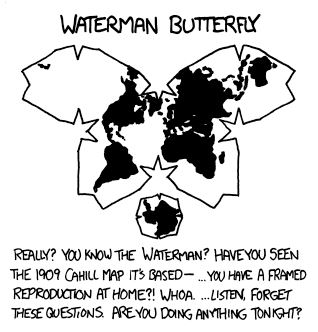

This is very exemplarily story. It shows us that race or any other differences between people never were the real problems. Problems are psychopathic schizophrenics with dementia who think they’re irreplaceable wise rulers of everything.
Wishing all the best to you and your friend.